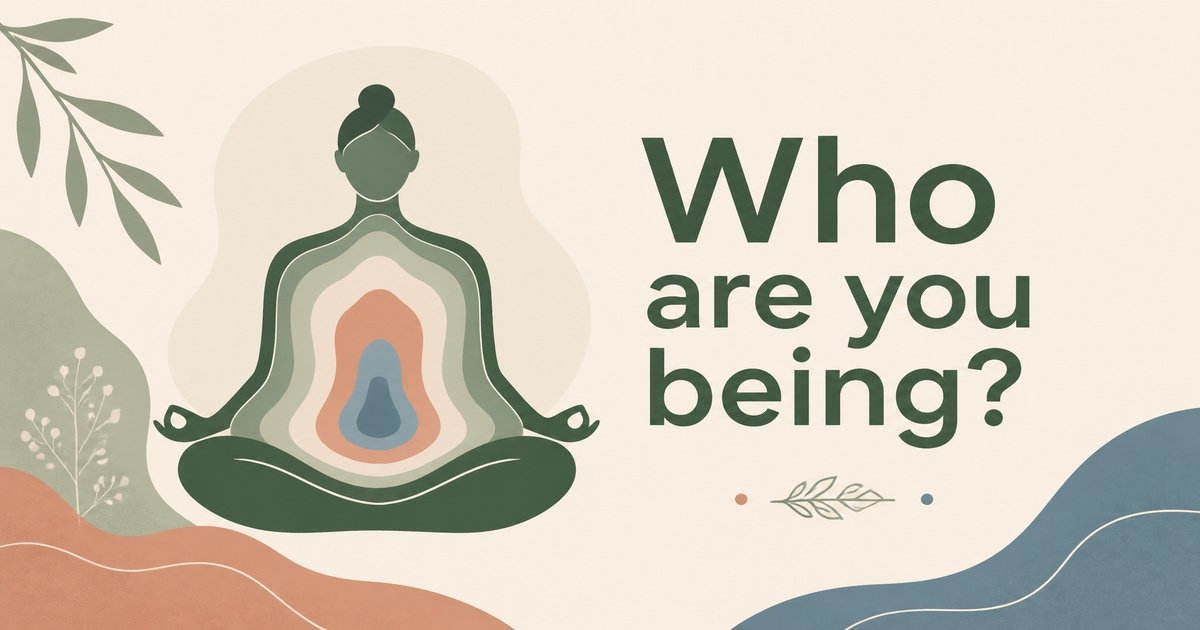
If you've spent time searching for a coach and felt like most of what you found was either too generic or too narrowly focused on revenue metrics, you're not imagining the gap. Most coaching falls into a few familiar categories — executive coaching, life coaching, business coaching — and each has genuine value. But there's a fourth type that's less commonly discussed yet often the most transformative for founders, executives, and high-achievers who feel like they've "succeeded" on paper while quietly losing themselves in the process: consciousness coaching.
What Is Consciousness Coaching?
Consciousness coaching is a form of structured one-on-one coaching that works at the level of identity, awareness, and internal operating system — not just behavior and strategy. Where business coaching asks what should you do differently?, consciousness coaching asks who are you being that's creating these results?
The distinction matters. Most people trying to grow a business or recover from burnout already know intellectually what they should do. They've read the books, they've taken the courses. The reason they're not doing it — or the reason doing it feels hollow — is rarely a knowledge gap. It's an alignment gap: a disconnect between what they consciously want and who they're unconsciously running as in daily life.
Consciousness coaching closes that gap.
How It Differs from Other Types of Coaching
It helps to see where consciousness coaching sits in relation to more familiar coaching types:
- Business coaching focuses on strategy, operations, sales, and revenue. The work is largely external: what systems, offers, and decisions will grow the business?
- Executive coaching focuses on leadership effectiveness: communication, decision-making, managing teams, and navigating organizational politics.
- Life coaching addresses personal goals, habits, relationships, and work-life balance — the external conditions of a fulfilling life.
- Consciousness coaching works underneath all of the above. It's focused on the internal architecture that drives how you show up in every domain — business, relationships, health, creativity — simultaneously.
In practice, a consciousness coaching engagement often surfaces issues that look like business problems on the surface but are rooted in identity. A founder who keeps over-working isn't usually lacking a productivity system — they're running an identity script that ties their worth to output. A leader who can't delegate isn't usually lacking trust in their team — they're unconsciously protecting a self-image built on being the most capable person in the room.
Consciousness coaching finds those scripts, brings them into full awareness, and helps you choose whether to keep running them.
What Consciousness Coaching Is Not
A few clarifications worth stating directly:
- It is not therapy. Therapy addresses clinically diagnosable conditions and is delivered by licensed mental health professionals. Consciousness coaching assumes a generally healthy client who wants to grow — not a client in crisis who needs clinical support.
- It is not spiritual bypassing. Done well, consciousness coaching is rigorous and practical. It does engage questions of meaning, purpose, and identity — but not as a way to avoid difficult business or personal realities. The goal is greater clarity and more effective action, not detachment from the material world.
- It is not woo. The principles underlying consciousness coaching — self-awareness, identity development, the relationship between internal state and external results — are well-documented in developmental psychology, neuroscience, and leadership research. The approach is structured, not mystical.
Who Benefits from Consciousness Coaching?
The clients who get the most from this kind of work tend to share a few characteristics:
- They've achieved external success but feel an increasing sense of disconnection — like the life they've built doesn't quite fit the person they're becoming.
- They're in or near burnout — not because they're lazy or undisciplined, but because they've been running at full capacity for years without a coherent internal operating system to guide what's worth their energy and what isn't.
- They're in a transition — launching something new, stepping into a bigger role, ending a chapter — and want to navigate it with intention rather than default patterns.
- They've tried therapy, business coaching, or personal development programs and found them helpful but incomplete — they kept returning to the same cycles.
If any of that resonates, it's worth exploring further.
What a Consciousness Coaching Engagement Looks Like
Every coach structures this differently. At InnerShift, consciousness coaching is built around three pillars that we call Business, Life, and Consciousness — the idea being that lasting transformation happens when all three are addressed as an integrated whole rather than separate problems to fix sequentially.
A typical engagement includes:
- A baseline assessment — mapping where you are across all three pillars to identify where misalignment is generating the most friction. Our Consciousness Alignment Assessment is built specifically for this purpose: 24 questions that surface where you're out of alignment before we spend a single session chasing the wrong thing.
- Identity-level inquiry — structured conversation designed to surface the unconscious operating assumptions driving your current results. This isn't introspection for its own sake; it's diagnostic work that informs everything else.
- Practical integration — translating the awareness you develop into concrete decisions, behavioral changes, and systems that hold in real life. The insights of consciousness coaching only become valuable when they actually change how you show up on Monday morning.
- Ongoing recalibration — because alignment isn't a destination you arrive at; it's a practice you build. Sustained coaching creates the feedback loop that keeps your internal operating system current as your business and life evolve.
The Connection Between Consciousness Coaching and Burnout Recovery
One of the most common reasons people come to consciousness coaching is burnout — and not the surface-level exhaustion that resolves after a vacation. We're talking about the deep structural burnout that keeps returning no matter how many systems you optimize or breaks you take.
That kind of burnout almost always has an identity layer. It's sustained by beliefs like: I have to do it myself to do it right. Slowing down means falling behind. Asking for help is weakness. My value is measured by what I produce.
No productivity app touches those beliefs. No delegation framework resolves them. They require the kind of direct, sustained work that consciousness coaching is specifically built for.
This is why our coaching programs treat burnout recovery not as a mood management problem but as an identity realignment project — one that addresses the root cause rather than the symptoms.
How to Know If You're Ready for This Kind of Work
Consciousness coaching requires genuine openness to looking at yourself honestly. If you're coming primarily because you want someone to give you a better strategy, this may not be the right fit — at least not yet. The leverage here is entirely internal.
The clients who thrive in this work are the ones who are genuinely curious about themselves: who are willing to sit with uncomfortable questions, challenge assumptions they've held for years, and follow the thread of what they discover wherever it leads.
If that's you, the starting point is simple: take the free consciousness assessment and see what it surfaces. It takes about 10 minutes and gives you a concrete map of where you're aligned and where you're not. That's where the work begins.
Frequently Asked Questions
Is consciousness coaching the same as spiritual coaching? Not exactly. While consciousness coaching does work with questions of meaning and identity — which some people experience as spiritual — it doesn't require a spiritual framework or belief system. It's grounded in practical psychology and developmental theory, not metaphysics.
Do I need to have a specific problem to start? No. Many clients come with a specific issue (burnout, a business decision, a career transition). Others come with a more diffuse sense that something isn't working without being able to name it clearly. Both are valid starting points — in fact, the second type often benefits most, because the vagueness itself is usually what needs to be examined.
How is consciousness coaching different from mindfulness training? Mindfulness practices — meditation, breathwork, and the like — are useful tools for developing present-moment awareness. Consciousness coaching uses that kind of awareness as a foundation but takes it much further: into identity, narrative, the unconscious assumptions that shape decisions, and the practical changes that awareness demands in work and life.
How long does consciousness coaching take? Meaningful shifts typically become visible within 6–12 weeks of focused engagement. Deeper, structural transformation — the kind that changes how you operate across all contexts — generally requires a 6–12 month commitment. This isn't a quick-fix modality, and coaches who promise otherwise are overselling it.
Ready to see where your alignment stands? Take the free Consciousness Alignment Assessment — 24 questions, 10 minutes, and a concrete map of what's working and what isn't. Or if you're ready to explore working together, book a free discovery call.